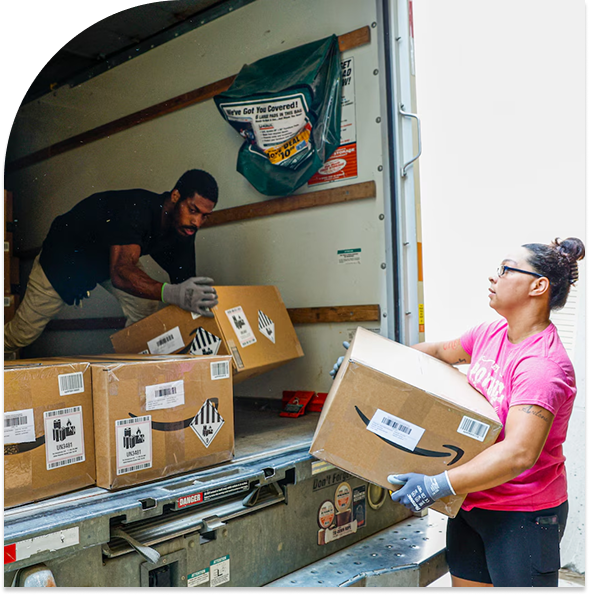
Amazon Logistics and Inventory Management
Amazon’s vast logistics network and inventory tools are the backbone of successful selling on the platform. From Fulfillment by Amazon (FBA) to advanced demand planning, sellers gain access to systems designed to reduce operational complexity, improve delivery speed, and increase customer satisfaction. Understanding these solutions is essential for businesses looking to maximize efficiency, control costs, and scale profitably on Amazon.
Key Components of Amazon Logistics & Inventory Management
Fulfillment Models
Fulfillment by Amazon (FBA)
Sellers send products to Amazon’s fulfillment centers, where Amazon handles storage, picking, packing, shipping, and customer service. This model offers scalability and Prime eligibility, making it one of the most popular fulfillment methods.
Seller Fulfilled Prime (SFP)
For sellers who prefer to manage their own inventory and shipping, Seller Fulfilled Prime enables them to offer Prime benefits while maintaining control over their fulfillment process. It provides flexibility but requires strict adherence to Amazon’s performance standards.
Multi-Channel Fulfillment (MCF)
Amazon’s fulfillment network isn’t limited to marketplace orders. With MCF, sellers can fulfill orders from other sales channels such as Shopify, Walmart, or their own eCommerce store using Amazon’s logistics infrastructure.
Inventory & Performance Metrics
Inventory Performance Index (IPI)
Amazon measures how efficiently sellers manage FBA inventory with the IPI score. Maintaining a strong IPI can reduce storage fees, unlock greater storage capacity, and help prevent stockouts or overstocking.
Amazon Warehousing(AWD)
AWD provides low-cost bulk storage and helps sellers distribute inventory across Amazon and non-Amazon channels. It simplifies replenishment while reducing storage costs for high-volume sellers.
Global & Advanced Logistics
Amazon Global Logistics (AGL)
For international expansion, AGL offers end-to-end logistics solutions. From ocean and air freight to customs clearance, Amazon provides streamlined international shipping that integrates with FBA.
Supply Chain by Amazon
A comprehensive suite of tools designed to manage sourcing, distribution, and delivery. It enables sellers to centralize supply chain operations and reduce complexity across global channels.
Technology & Planning Tools
Data-Driven Demand Planning
Amazon leverages machine learning and advanced analytics to forecast demand, optimize replenishment, and minimize excess storage. Sellers benefit from predictive insights that help maintain healthy stock levels.
Inventory MGMT Dashboard
Within Seller Central, sellers gain access to a powerful dashboard to track stock levels, monitor performance, and receive proactive alerts for restocking needs.
Inventory MGMT Software
Beyond Amazon’s own systems, sellers can leverage software solutions including Seller Central, the Amazon Seller App, and third-party integrations to automate forecasting, streamline replenishment, and optimize overall inventory control.
Benefits of Amazon's Inventory & Logistics Management
Reduced Cost
Optimizing inventory and logistics helps lower storage fees, reduce shipping expenses, and minimize waste. By using Amazon’s warehousing options and data-driven tools, sellers can cut unnecessary costs while keeping products closer to customers.
Improved Efficiency
Automation and streamlined fulfillment processes increase efficiency across warehousing, order management, and shipping. With tools like FBA and Supply Chain by Amazon, sellers save time and resources while meeting delivery promises.
Customer Experience
Accurate inventory management ensures products are in stock and available when customers need them. Reliable fulfillment improves delivery speed and satisfaction, which can lead to stronger reviews and repeat purchases.
Increased Sales
Efficient inventory systems help prevent stockouts, overstocking, and missed sales opportunities. Sellers with optimized logistics maintain higher sales velocity and better search rankings, boosting overall revenue potential.
Scalability
Amazon’s infrastructure supports businesses of all sizes. Whether a seller is shipping a handful of units or scaling to global markets, Amazon’s logistics and inventory management tools provide the flexibility to grow without added complexity.
Free growth plan
7 Steps of How SellerLoop Handles Logistics & Inventory Management
At SellerLoop, logistics and inventory management are approached as a strategic process designed to align operations with growth goals. The process typically includes:
Free growth plan
Step 1. Initial Audit and Planning
The team begins with a detailed audit of the seller’s current inventory systems, fulfillment models, and sales history. This allows them to identify inefficiencies, calculate demand forecasts, and set up customized logistics strategies.
Step 2. Inventory Forecasting and Demand Planning
Using Amazon’s data tools along with advanced analytics, SellerLoop forecasts demand at SKU-level precision. This minimizes risks of stockouts or overstocking and ensures capital is used effectively.
Step 3. Fulfillment Optimization
Based on the seller’s needs, SellerLoop recommends and manages the right fulfillment model whether FBA, SFP, or Multi-Channel Fulfillment. They handle setup, monitor KPIs, and ensure performance requirements are consistently met.
Step 4. Supply Chain and Replenishment
Coordination with suppliers, shipping carriers, and Amazon’s Warehousing and Distribution ensures smooth replenishment. Inventory is strategically placed to reduce costs and improve delivery times across regions.
Step 5. Ongoing Monitoring and IPI Management
We actively monitors the Inventory Performance Index and other key metrics to maintain a healthy account status. Alerts, dashboards, and reports are reviewed regularly to optimize restock cycles.
Step 6. Global Expansion Support
For sellers scaling internationally, We integrates Amazon Global Logistics and Supply Chain by Amazon into the strategy, providing end-to-end support for cross-border shipments and compliance.
Step 7. Continuous Improvement and Reporting

Regular performance reviews and custom reporting ensure sellers always have clear visibility into inventory health, logistics efficiency, and cost savings. The process is continuously refined to adapt to market changes and sales growth.
Explore more of Amazon Services
Amazon 360
Increase sales with optimized Amazon listings & targeted PPC ads that improve rankings & ROI.
Learn More
SEO for Amazon Listings
Boost online visibility with smart keyword use, technical SEO, and ranking-focused strategies.
Learn More
Inventory Management
Build fast, secure, and responsive websites tailored for performance & business growth.
Learn More
Amazon Advertising
Create smooth, user-friendly interfaces that make every action simple, clear, and engaging.
Learn More
Frequently asked questions
Get Help From Professionals
Growing on Amazon requires more than just listing products; it takes the right strategy, execution, and expertise. I help brands overcome visibility issues, improve conversions, and build long-term growth with tailored solutions in SEO, advertising, and design.
With hands-on experience managing end-to-end Amazon operations, I provide the guidance and support you need to turn challenges into opportunities.
Your Benefits:
Client-oriented
Result-driven
Independent
Problem-solving
Competent
Transparent
Your Benefits:
1
We schedule a call at your convenience
2
We will create an audit to find gaps.
3
We will run a discovery session to understand your brand.